Perimenopause
The transition phase
Menopause
The milestone moment
Definition
Perimenopause
The years of hormonal fluctuation leading up to the final period. Estrogen and progesterone rise and fall unpredictably. You are still ovulating — but less regularly.
Menopause
Technically, menopause is one single day — the 12-month anniversary of your last period. It is confirmed retrospectively. You are no longer ovulating.
When it starts
Perimenopause
Typically begins in the mid-to-late 30s to mid-40s. It can start as early as 35. The average onset is around ages 40–44, but varies widely by individual.
Menopause
The average age is 51 in most countries. Anything before age 45 is considered early menopause. Before age 40 is known as premature ovarian insufficiency (POI).
How long it lasts
Perimenopause
Lasts 4 to 12 years on average. Most women spend the better part of a decade in perimenopause, often without realizing it.
Menopause
A single moment in time — the point reached after 12 consecutive months without a period.
Periods
Perimenopause
Periods are still present, but they change. They may become heavier, lighter, more frequent, less frequent, or unpredictable. Pregnancy is still possible during this time.
Menopause
Periods are absent for 12 consecutive months. After this point, any vaginal bleeding should be evaluated by a doctor.
Hormone levels
Perimenopause
Hormones are fluctuating and unpredictable. Progesterone declines first, while estrogen levels can swing widely — which is why a single blood test may be misleading.
Menopause
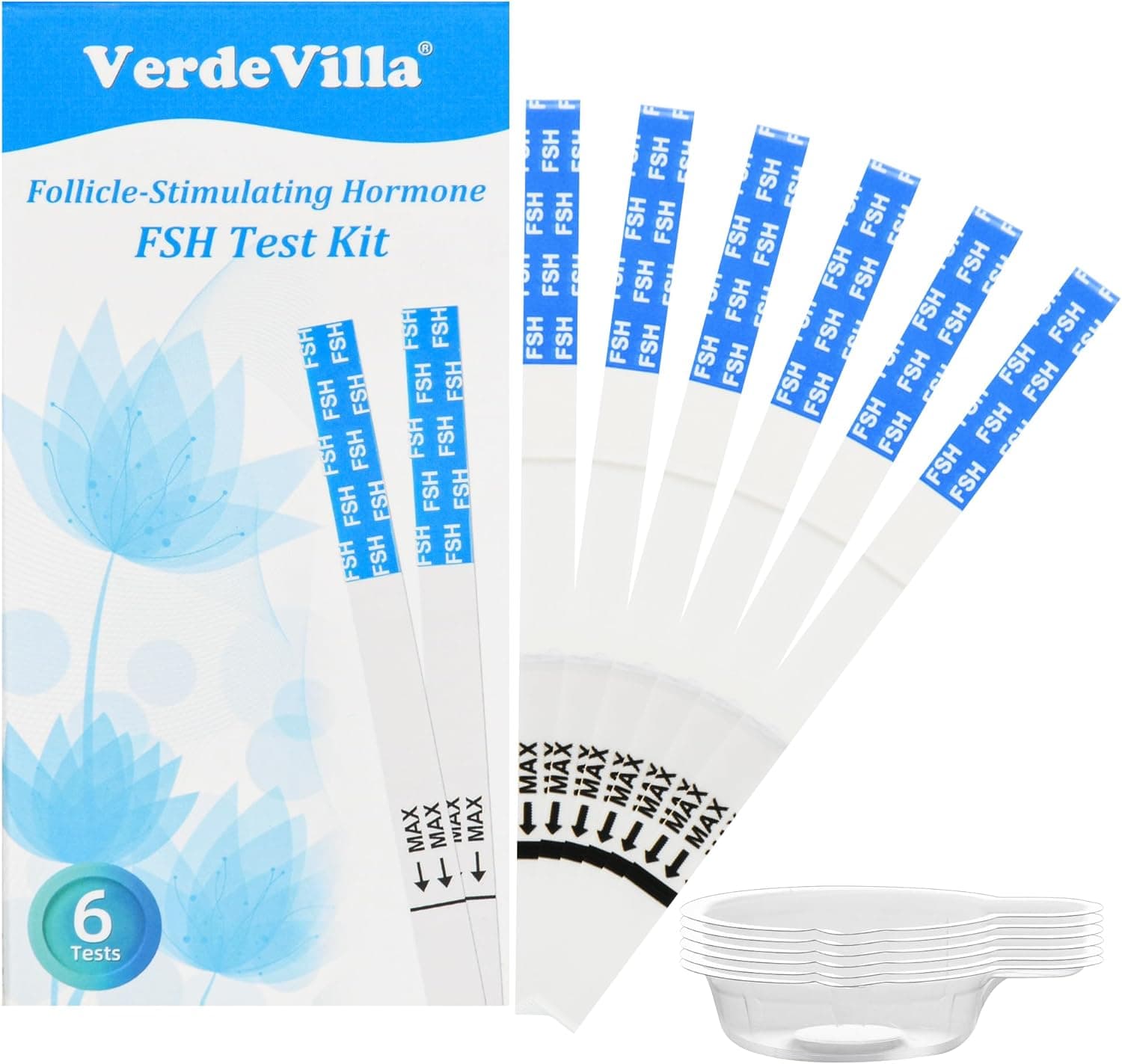
Hormone levels are consistently low. FSH is elevated (typically above 30 IU/L), and estrogen settles at a new, lower baseline.

![[5 Pack] Carethetic FSH Menopause Test Kit - Midstream At-Home Menopause Test, High-Sensitivity FSH Detection for Perimenopause & Fertility Monitoring product image](/_next/image?url=https%3A%2F%2Fm.media-amazon.com%2Fimages%2FI%2F61ROzPJ-K3L._AC_SL1500_.jpg&w=3840&q=75)